London Agreement & Charter, August 8, 1945

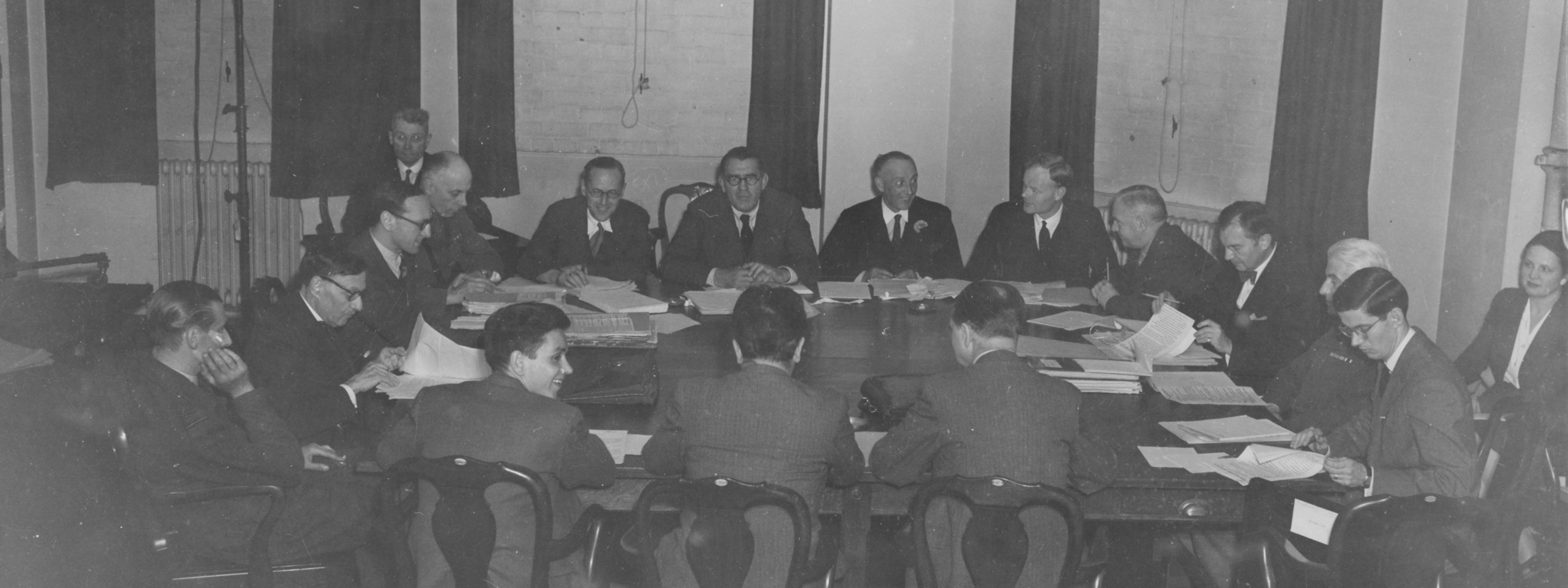
On August 8, 1945, representatives of the United States, United Kingdom, Soviet Union, and France signed the London Agreement, a groundbreaking treaty that established the legal foundation for prosecuting the major Nazi war criminals of World War II. Attached to the Agreement was the Charter of the International Military Tribunal (IMT).

Together, they created the world’s first international criminal court and defined crimes that would shape international law for generations to come.

The  London Agreement

  • Signed in London by the four Allied powers: the United States, United Kingdom, Soviet Union, and France.
  • Established the creation of the International Military Tribunal (IMT) at Nuremberg, Germany.
  • Opened the door for additional Allied nations to join (eventually 19 countries adhered).

The Nuremberg Charter

The Charter, annexed to the Agreement, defined:

  • Jurisdiction of the IMT
    • To try and punish individuals (not just states) accused of war crimes.
  • Crimes Under International Law
    • Crimes Against Peace: Planning, initiating, or waging aggressive war.
    • War Crimes: Violations of the laws or customs of war (e.g., mistreatment of prisoners, killing of civilians).
    • Crimes Against Humanity: Atrocities committed against civilian populations, including persecution on political, racial, or religious grounds.
  • Individual Responsibility
    • Leaders, organizers, and accomplices could be held personally accountable.
    • “Following orders” was not an absolute defense.
  • Procedural Rules
    • Guaranteed fair trial rights, while ensuring proceedings moved efficiently.

Why It Mattered

  • Historic First: The first time in history that international law was used to hold leaders of a nation accountable for crimes against humanity.
  • Foundation of Modern International Law: Inspired later tribunals for Rwanda and the former Yugoslavia, and ultimately the establishment of the International Criminal Court (ICC) in 2002.
  • Moral Legacy: Affirmed the principle that no one, not even heads of state, is above the law.

Robert H. Jackson's Role

  • As U.S. Supreme Court Justice appointed by President Truman to serve as Chief U.S. Prosecutor, Robert H. Jackson was central to shaping the London Agreement and Charter.
  • Jackson headed the American delegation in London and played a decisive role in negotiating the Charter’s terms.
  • His leadership and legal vision helped transform the Allies’ desire for justice into a coherent legal framework that remains influential to this day.

"The privilege of opening the first trial in history for crimes against the peace of the world imposes a grave responsibility. The wrongs which we seek to condemn and punish have been so calculated, so malignant, and so devastating, that civilization cannot tolerate their being ignored, because it cannot survive their being repeated. That four great nations, flushed with victory and stung with injury stay the hand of vengeance and voluntarily submit their captive enemies to the judgment of the law is one of the most significant tributes that Power has ever paid to Reason."

- Robert H. Jackson, Opening Statement before the International Military Tribunal

Subscribe to our Newsletter

Copyright Robert H. Jackson Center 2024 | All rights reserved
heart linkedin facebook pinterest youtube rss twitter instagram facebook-blank rss-blank linkedin-blank pinterest youtube twitter instagram