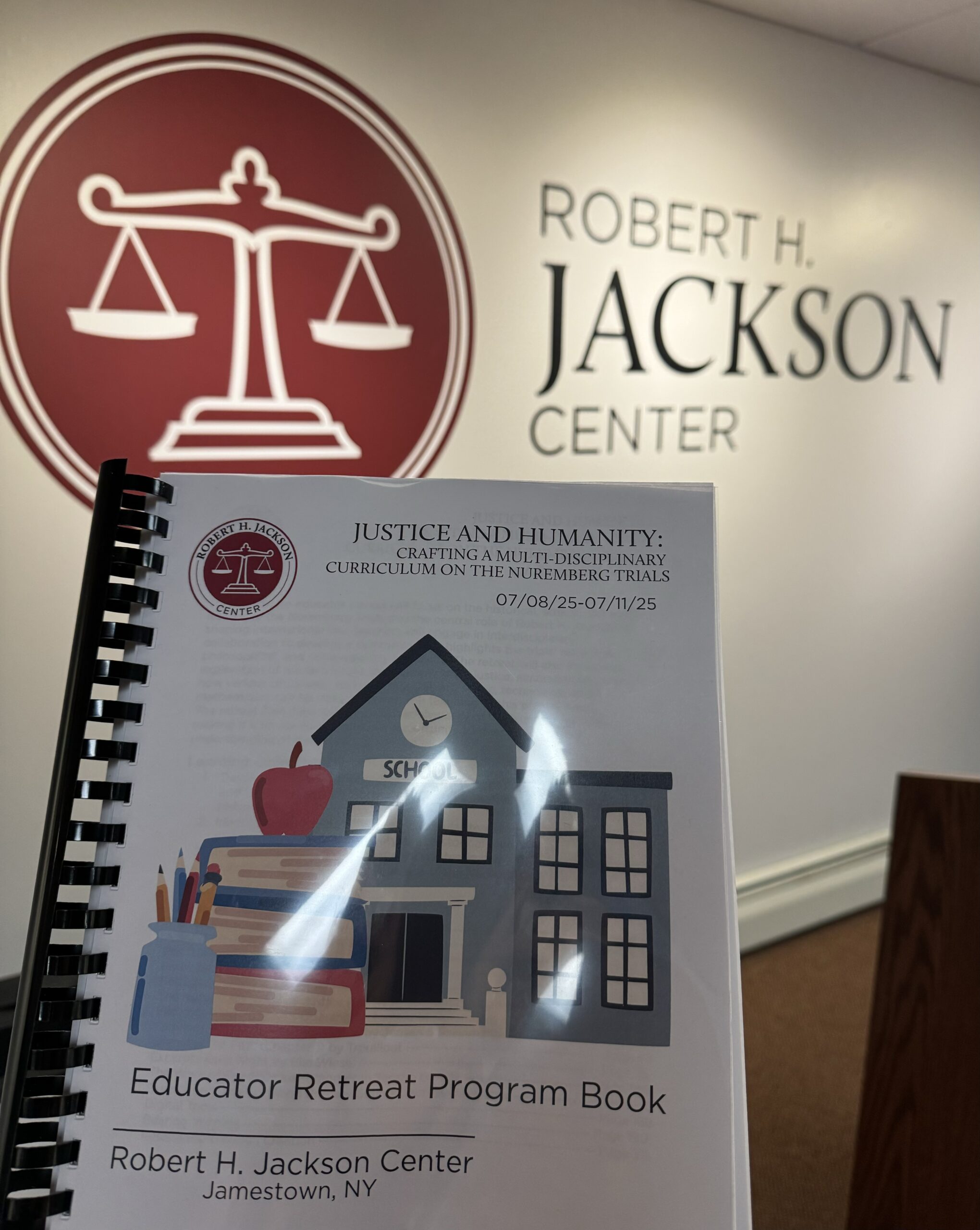
From July 8 to 11, the Robert H. Jackson Center welcomed a dynamic group of educators for our 2025 Educator Retreat. It was four powerful days of interdisciplinary learning, critical inquiry, and collaboration grounded in the enduring lessons of the Nuremberg Trials and the atrocities that led to them.
The retreat was taught by the Center's Director of Programs, Elizabeth Hosier, and Eileen Angelini, Ph.D., currently serving as the Upstate Regional Coordinator of 3GNY and recipient of a Canada-U.S. Fulbright award Dr. Angelini's work with Holocaust survivors and documenting the events of the WWII Occupation of France was recognized by the French Government with the award of Chevalier dans l'Ordre des Palmes Académiques. Dr. Angelini’s teaching has also been recognized by the American Association of Teachers of French (AATF) and by the New York State Association of Foreign Language Teachers (NYSAFLT).
This year's theme, Justice and Humanity, invited participants to explore how history, language arts, music, science, math, and art intersect in the pursuit of justice. Through immersive sessions, hands-on activities, and rich discussion, educators deepened their understanding of how to meaningfully teach complex histories and ethical challenges in today's classrooms.
Highlights from the Week
Day 1: The Legal and Historical Foundations
We began by grounding ourselves in the context of the Nuremberg Trials, with a session on Jackson's role in shaping international justice. Participants explored Jackson's Opening Statement and discussed how foundational knowledge of Nuremberg can support cross-curricular instruction. We also took a guided tour of the Center, connecting history to place.
In the afternoon, educators looked at primary sources. They examined photographs, trial documents, and video footage all used as evidence in the Trials. We discussed the difference of narrative and data when it comes to testimony and what impact each can have. Finally, we took some time to experiment with tools like Knight Lab, Book Creator, and Soundtrap as we discussed what tools educators can use to create multimedia projects that are meaningful and engage and empower their students.
Day 2: Bearing Witness
Wednesday focused on literature, poetry, art, music, and propaganda. Educators explored the emotional and pedagogical power of works like Maus and Holocaust poetry. They also engaged with new resources from Generational Speakers Bureaus in both New York State and Pennsylvania, as well as Project Empathy, a UK-based film restoration and colorization initiative. They took time to analyze propaganda posters that are hung in the Center, and ended the day by reflecting on how resistance, resilience, and record emerge through music, art, and creative expression.
Day 3: Citizenship in Action
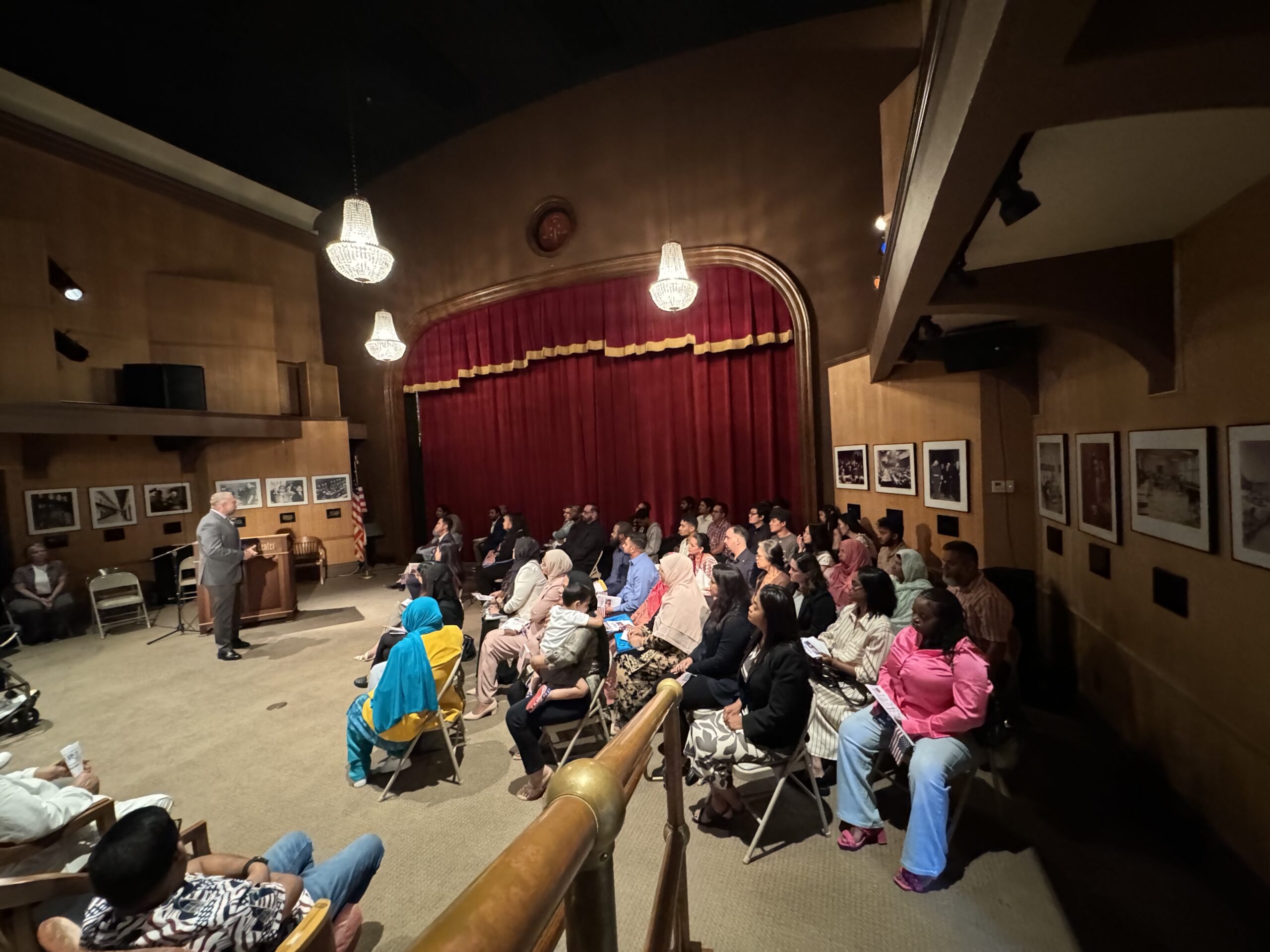
Thursday morning, the Center hosted a Naturalization Ceremony (welcoming 52 new citizens from 22 countries). Educators reflected on the meaning of citizenship and what it would mean to have it stripped away as the Nazis did to their victims. We looked at citizenship oaths and loyalty oaths and compared them over time. We also watched France Divided, a film by retreat facilitator, Eileen Angelini, and focused on acts of kindness, resistance, and courage. The discussion centered on activities designed to encourage students to have empathy, a desire to act, and not be bystanders.
Day 4: Bringing It All Together
Friday's sessions focused on collaboration, curriculum-building, and reflection. Educators created lesson plans and shared their ideas with one another, receiving peer feedback and offering support to each other. As the retreat came to an end, educators were asked to reflect on what they had learned about justice, about teaching, and about themselves.
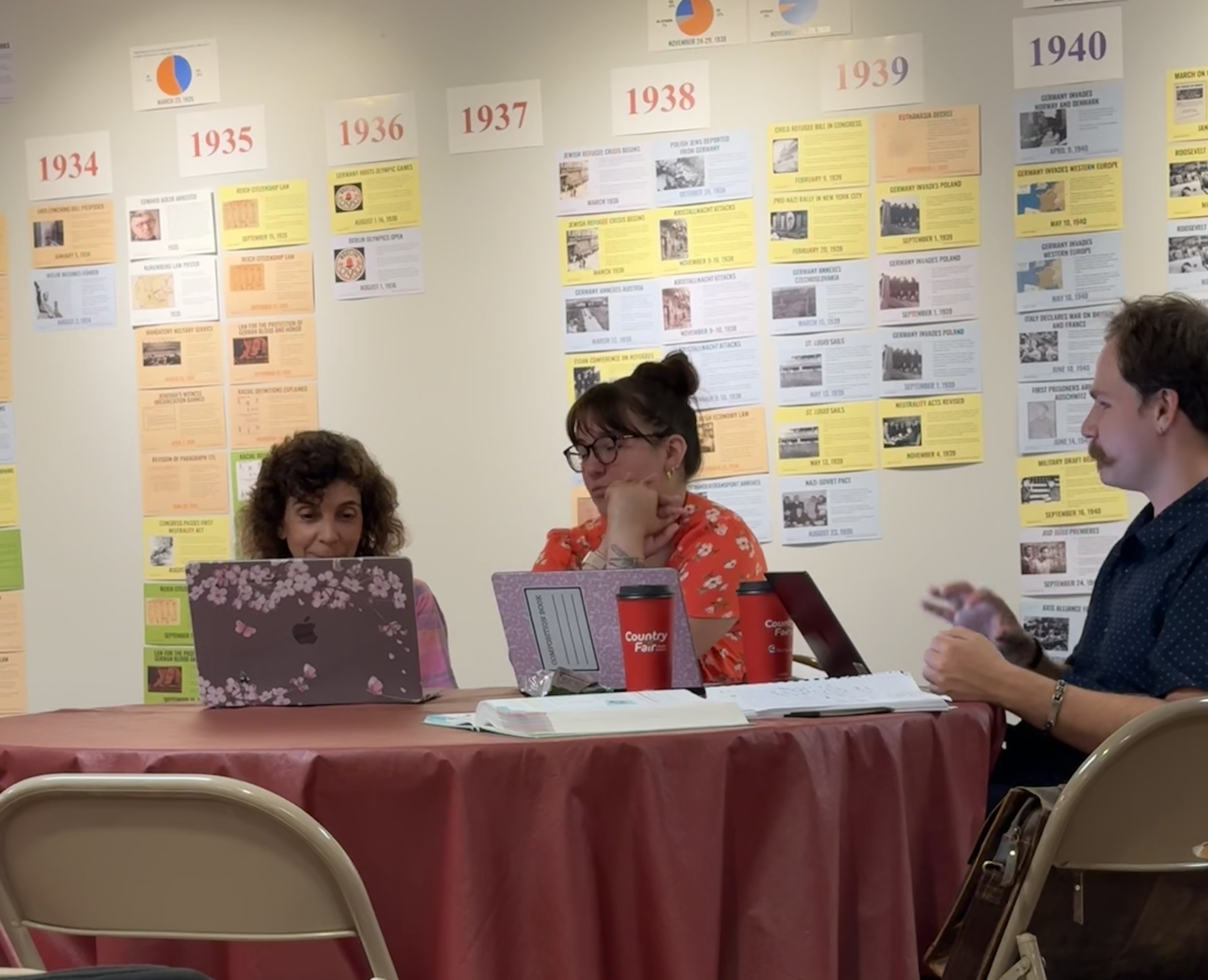
As one educator put it in our closing session, "This is some of the most impactful professional development I have attended in my fifteen years of teaching." The retreat was a space not only for learning, but for community. We are honored to support educators who are shaping classrooms rooted in truth, inquiry, and empathy.
Thank you to all who attended, and to those who couldn't join us, we hope to see you at one of our upcoming educator programs!