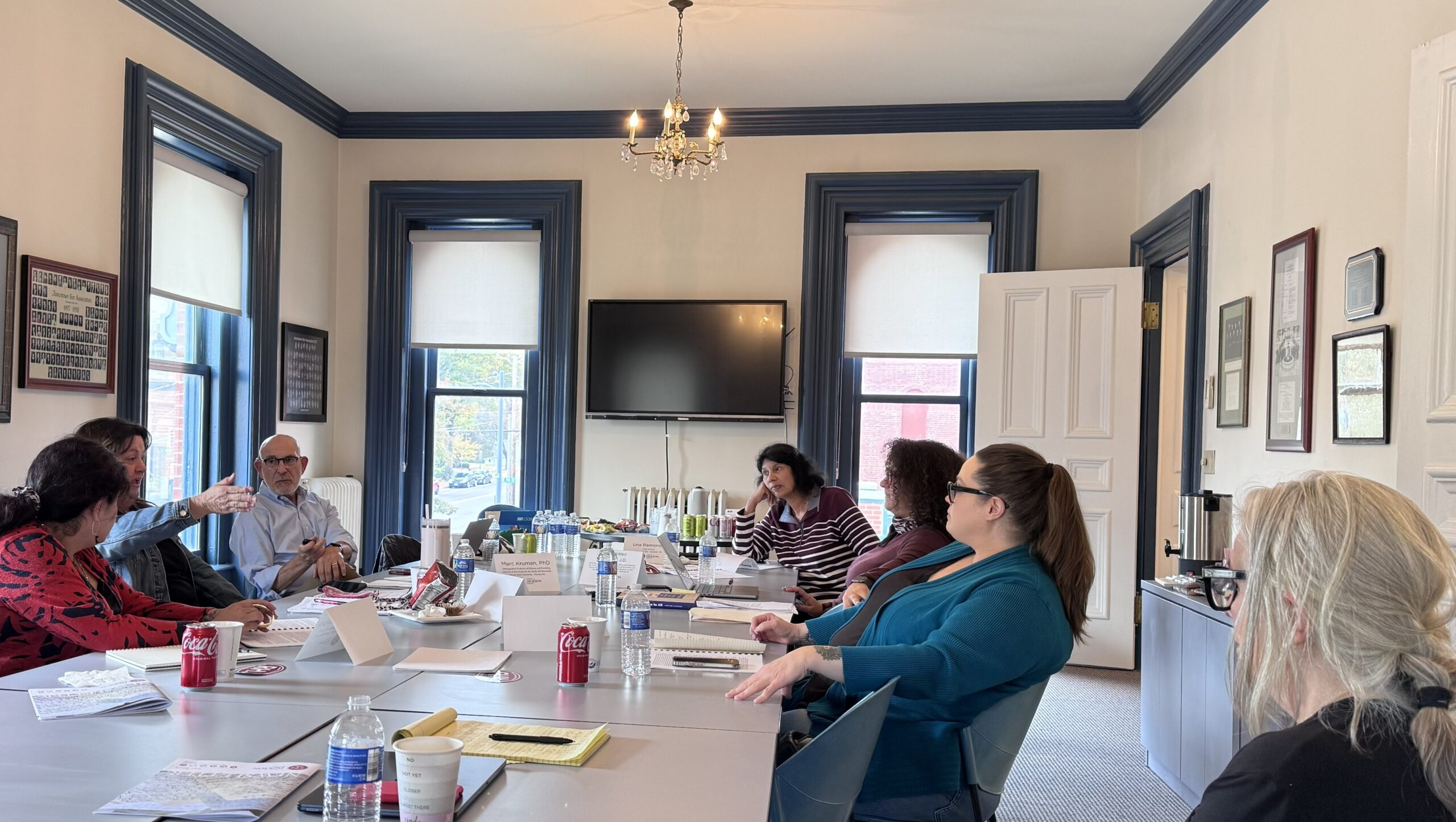
On October 11, the Robert H. Jackson Center welcomed teachers for our fall educator seminar, Citizenship: History, Meaning, and Conflict. What unfolded was a thoughtful, energizing day of discussion about what it truly means to be a citizen, in history, in law, and in the classroom.
Led by Dr. Marc Kruman of Wayne State University and Professor Sheila Vélez Martínez from the University of Pittsburgh School of Law, the seminar offered educators a chance to step back from day-to-day teaching and look at the bigger picture. Together, we explored how ideas of citizenship have evolved over time, the court cases that have shaped our understanding of rights and belonging, and the ways civic participation continues to be tested in modern America.
One of the most valuable aspects of the day was how practical it felt. Teachers didn’t just hear lectures; they engaged in lively conversations about how to translate these complex topics into meaningful lessons for students. From discussing strategies to spark civil discourse in the classroom, to connecting historical moments to current events, educators left with new tools and fresh perspectives for helping students think critically about what it means to belong and to participate in a democracy.
It was also powerful to connect these themes to Justice Robert H. Jackson’s legacy, his belief that citizenship carries both privileges and responsibilities, and that the strength of democracy depends on informed, engaged citizens.
We’re deeply grateful to everyone who joined us, to our exceptional scholars for their insight and energy, and to Fessenden Laumer & DeAngelo, PLLC for sponsoring this meaningful program.
Programs like this remind us that civic education is not just about learning the rules of democracy, it’s about keeping its spirit alive in every classroom.